Planting seeds
Lessons in life learned in our grandfather's garden

By Lonnie Adamson
My brothers and I usually interacted with our grandfather in his garden. Looking back, it seems he was planting seeds in us, maybe not intentionally, but the experience had an effect on our growth.
The visit to his house sometimes started awkwardly, which is odd because of how often we were there and the welcoming warmth of the place 40 miles from where we grew up. Every few weeks we would visit on a Sunday afternoon or around a holiday.
Food was brought in for a family dinner around our grandparents dining table; then we would all sit in the living room and try to talk. For the children -- my two brothers and me – long silences would turn awkward.
After several attempts at talking, someone would say, “Wanna go see the garden?” At that point the three of us would blast through the front door, make the turn past the cars in the driveway, down past the peony bush to the backyard.
Our grandfather was not afraid to experiment with his garden. One year the rows would be turned lengthwise, the next cross ways. The main part of his yard was shady, but he always seemed to make something grow there.
One year he borrowed the lot behind his property for a larger corn patch and a sunny spot to grow it in.
Sweet corn was a staple of his garden. He cultivated okra, several varieties of tomatoes, pole beans and cantaloupes. Surely he planted cucumbers but, I do not recall seeing them. The fall garden would offer collards and turnip greens. Turnips were always grown for the greens and never the turnip root part. Strawberries were popular one year.
Our grandfather was an educated man for his time and place – Alabama of the first half of the 20th century. He had two years of business school education beyond high school. He also enjoyed reading about gardening, subscribed to Mother Earth News magazine. He continued in his retired years to study and practice organic gardening in the 1970s.
Sometimes however, as bugs ravaged his tomato plants, he could not resist the use of Sevin Dust.
One his more unique practices was raising fishing worms. He sold the worms along his route to country stores as a candy salesman, but the beds eventually provided lovely garden soil. My brothers were actively involved in working the worm beds. I still have his collection of books on raising red wigglers.
When I say his gardening adventures with his grandsons planted seeds in us, I don’t think he intentionally used gardening for training. He enjoyed gardening, thought it valuable and enjoyed engaging with us in the garden.
The seeds he planted grew a love of plants and respect for gardening in each of us. As an offshoot, I came to enjoy raising chickens and the value of chicken litter to my gardening efforts.
Working in the garden has also planted seeds in my brothers and me to grow new ideas, to try new things, to try the same things in different ways, to read and to study.
It has taught us about garden-to-table practices, the difference between fresh-out-of-the-garden flavors and store-bought flavors.
It has planted seeds of work, persistence and heat tolerance.
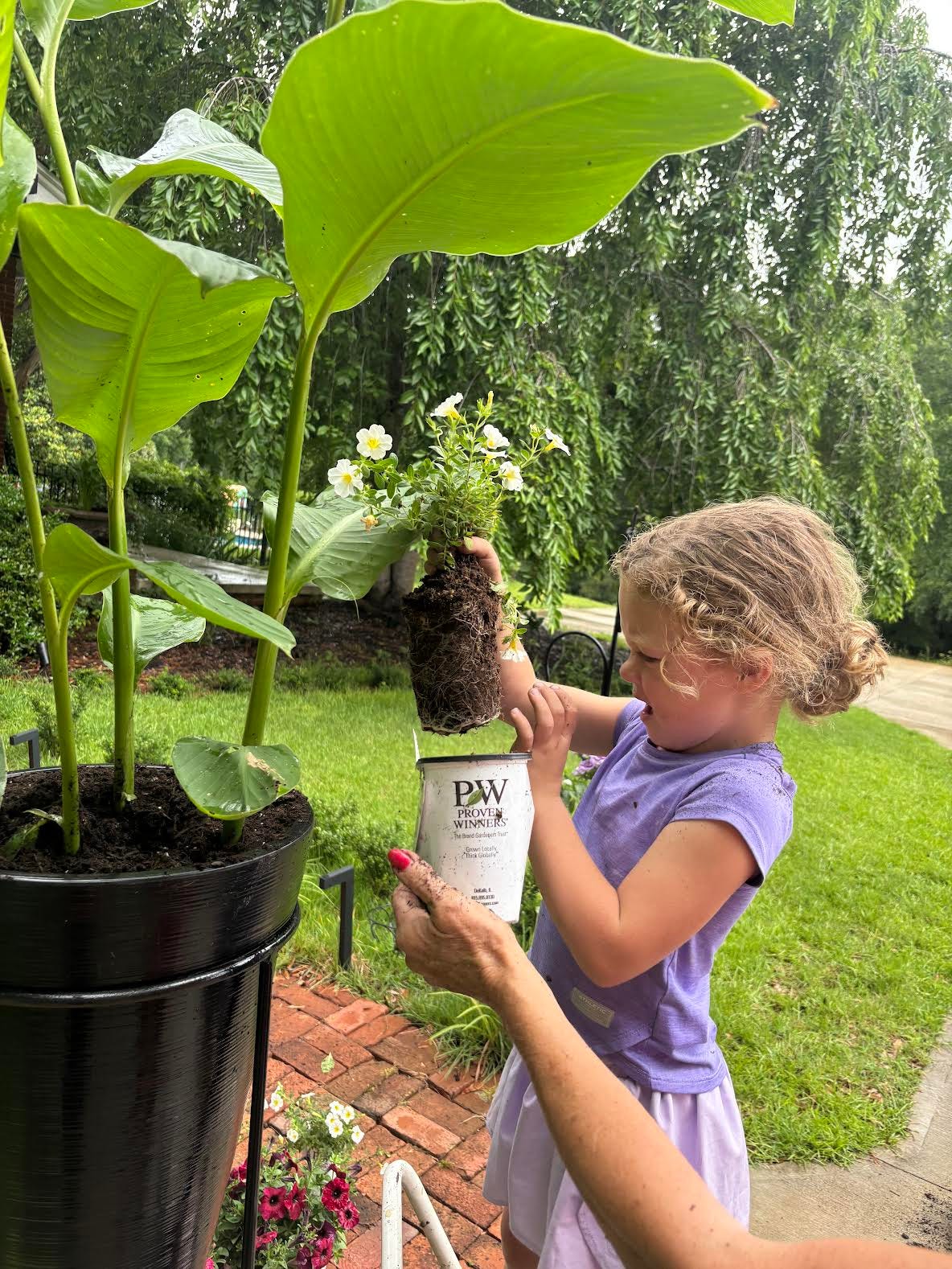
Chicken chores have become a regular activity when our grandchildren visit.
My wife, Nancy, (Lovey to the grandchildren) is another purveyor of plant knowledge to the children. She particularly enjoys blooming things and providing our outdoor setting with amazingly calming colors.
I hope the children will continue enjoying the chickens and Nancy’s growing things. I don’t really expect them to raise chickens for their grandchildren, but I hope the experiences in the garden teach them about responsibility and the wonder of raising their own food, creating beauty and working for what they have.
This is a wonderful and moving description of our grandfather for whom you are named. Lonnie Dewitt Adamson was born in 1902, himself the grandson of a farmer who raised and then buried 6 sons during the Civil War.
I cherish my memories of working with him in the garden, although I was more fixated on the earthworm business. He kept 4 raised wooden beds in the backyard, underneath a gigantic pecan tree, each 4’X 10’ for his worm business. For me nothing could be more fun than packing juicy worms in small bait containers for his delivery route.
But your recollections prompt me to comment on his enthusiasm for expanding his garden domain. One summer we explored the life cycle of the Catalpa Sphinx Moth. Years earlier he had planted a catalpa seedling that grew to dominate one corner of the yard. He was of a mind to expand his earthworm kingdom to include the voracious caterpillars of this moth and was planning years in advance. I think he eventually recognized the limitations of harvesting 3 inch black and green caterpillars from a 20 foot tree but still the lessons grew strongly in me.
I loved him deeply and I can tell you do too.
Your brother Rick
It literally never occurred to me that people raise worms. I enjoyed learning it here.